Detroit Canadians Trying Register U.S. Trademarks Lawyer
Are you a Canadian company searching for a U.S. trademark attorney in Detroit, MI?
At Trademark Lawyer Law Firm, we are trusted trademark counsel for business owners throughout Detroit, MI.
If your company ships products across the Detroit River into the United States, the brand on those products carries no federal protection here until it is registered with the U.S. government. Canadian owners also cannot file that application on their own. An attorney licensed in the United States must sign and submit it. Our founder has concentrated on trademark work since 2008, and our Michigan office is located in Ann Arbor. Speak with a
Detroit, MI Canadians trying register U.S. Trademarks lawyer about the brand you are bringing across.
Canadians trying register U.S. Trademarks lawyer Detroit, MI
The port of Detroit received 1,562,531 incoming trucks from Canada during 2023, which was 28.3 percent of all truck traffic entering along the northern border, according to
BTS border crossing data. Goods moving in that volume reach American customers, and American customers are what create U.S. trademark rights. A trademark lawyer for Canadian applicants is an American-licensed attorney who represents a foreign business before the U.S. Patent and Trademark Office. That representation is not optional. The USPTO requires any applicant whose permanent address sits outside the United States to appoint U.S. counsel, and the requirement applies to the original application, every response to the office, and every maintenance filing after the mark registers. A Canadian trademark agent cannot fill that role.
Types of U.S. Trademark Matters We Handle for Canadian Clients in Detroit
Canadian companies operating near the border tend to arrive with goods already in American hands. Distributors have stock, retailers have shelf space, and the brand is in front of U.S. customers. That changes which questions matter first.
- Trademark registration. We prepare and file U.S. applications for Canadian businesses. When products are already selling here, we document that activity properly, because the evidence supporting a use-based application has to reflect genuine sales rather than shipments between related companies.
- Office action. An office action is a letter from the examining attorney assigned to your file, refusing the application or requiring a change. Canadian applicants frequently receive one requiring them to appoint American counsel. We enter the file, answer the underlying refusal, and keep the application from being abandoned.
- Trademark searches. Our trademark searches look for registered and pending U.S. marks that could block your application. This matters more when a product is already crossing the border, because a conflict discovered later can require pulling packaging from American shelves.
- Trademark infringement. We evaluate claims for Canadian owners whose marks are being used by American businesses. We also represent Canadian companies that receive a demand letter from a U.S. mark owner.
- Trademark litigation. Infringement suits proceed in federal district court. Disputes about whether a mark should be registered at all go before the TTAB, the administrative board that hears oppositions, cancellations, and appeals from refusals.
- Trademark licensing. Canadian owners who authorize an American distributor to use their brand need quality control terms in the written agreement. An owner who exercises no control over how the mark is used can lose the right to enforce it.
- Advertising review. Campaigns written for Canadian audiences sometimes use comparative claims or third-party brand names in ways that draw complaints in the United States. We review advertising copy before it runs here.
- Copyright protection. Package artwork, product photography, and website text can qualify for copyright in addition to any trademark rights. Ownership questions arise often, because the Canadian agency that produced the work may still hold the rights.
- Customs enforcement. Once a mark is registered, Customs recordation allows border officers to detain counterfeit goods bearing your brand as they enter the country. This is a practical option for companies whose products move through a port of entry.
Why Choose Trademark Lawyer Law Firm as my U.S. Trademark Lawyer in Detroit, MI?
Our Michigan Office and Detroit Practice
Our Michigan office is in Ann Arbor, roughly forty miles west of downtown Detroit and about an hour from the Windsor crossing.
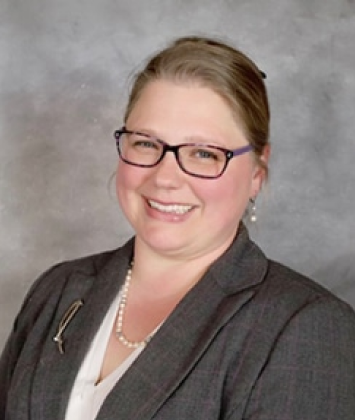
J.J. Lee founded the firm in 2008 and practices in trademark registration, brand protection, and enforcement. He is admitted in Michigan and is a member of the
State Bar of Michigan. He earned his law degree from Ave Maria School of Law in 2005 after completing his undergraduate studies at UCLA in 1994. Canadian owners who need broader brand support will find our
trademark lawyer in Detroit, MI very helpful.
Federal Court Admission and Filing Record
Registration work happens at the USPTO, but enforcement happens in court. Our founder is admitted to the United States District Courts for the Eastern and Western Districts of Michigan, which are the courts where a Michigan infringement suit is filed, and to the United States Supreme Court. Behind that, the practice has produced more than 7,000 registered trademarks and thousands of applications filed with the USPTO, along with office action responses spanning the full range of refusal grounds. Registration matters are handled on a flat fee, quoted before we begin, and consultations are free.
Understanding U.S. Trademark Registration for Canadian Applicants
What Federal Registration Protects and How Rights Begin
American trademark rights are created by use, not by paperwork alone. A business that sells under a name in the United States acquires limited rights in the geographic area where it actually sells, even without filing anything. Federal registration is what converts those limited rights into nationwide protection, and the
date of first use you claim in the application becomes part of the public record. A Canadian company can file before selling here by stating a genuine intention to enter the market, and it can also rely on an existing Canadian registration as the ground for its U.S. application. What registration cannot do is stretch beyond the products listed in the application. Every application is assigned to one or more
goods and services classes, and protection runs only as far as those listings describe. A company that registers a mark for apparel holds nothing in the beverage category, even if the same name appears on both.
What Is The U.S. Trademark Registration Timeline?
Most of the schedule is controlled by the office rather than the applicant. Applications generally move through five stages.
- Examination. Several months pass before an examining attorney reviews the file, and the wait varies with the office backlog.
- Office action. If the examiner refuses the application or requires a correction, a deadline for the response runs from the date the letter is issued. A trademark office action is a routine part of the process and not a final rejection.
- Publication. The mark is published so that any business believing it would be harmed by the registration may object.
- Registration or allowance. Applications based on current sales register after publication. Applications based on intent receive a notice of allowance, which sets a deadline for proving that sales have started.
- Maintenance. Documents confirming continued use are due at fixed intervals, and a registration is cancelled if they are not filed.
What Are Important Aspects of a U.S. Trademark Application?
Examining attorneys focus on a small number of issues, and Canadian applications tend to encounter the same ones.
- Distinctiveness. A mark describing a quality or feature of the goods will be refused unless the owner shows that American consumers already connect the term to one company.
- Conflicting marks. The examiner compares your mark to existing registrations, weighing sound and meaning as heavily as spelling.
- Proof of use. The evidence must show the mark as a customer sees it, which means photographs of actual packaging or a live sales page rather than a design file.
- Entity name. The applicant must be the Canadian entity that owns and controls the mark. An error here can support a challenge to the registration years later.
- Domicile. The permanent address of the owner determines whether U.S. counsel is required, and a Canadian address triggers that requirement.
What Should You Bring to Your Trademark Consultation?
Gathering a few documents ahead of the meeting makes the conversation more useful. Bring whatever exists, even if the file is thin.
- Your Canadian registration or application number
- Photographs of the mark on packaging, products, or signage
- Records of your first sale to an American customer
- The list of goods or services you sell or plan to sell here
- Any letter received from the USPTO or from another company about the mark
Consultations are free and take place by phone or video. We will give you a direct assessment of whether the mark can be registered, what the likely obstacles are, and what the filing will cost.
Detroit Federal Court and Michigan Trademark Resources
Trademark infringement suits arising in the Detroit area are heard in the
Eastern District of Michigan, which sits at the Theodore Levin United States Courthouse on West Lafayette Boulevard. State registration is a separate and narrower option. The Corporations Division within the Department of Licensing and Regulatory Affairs handles
Michigan mark registration and publishes the
Michigan trademark forms used to apply, though a state registration reaches no further than Michigan itself. Companies weighing protection in additional countries can consider the
global marketplace alongside the U.S. filing.
Reach Out to Trademark Lawyer Law Firm to Schedule a Consultation
Goods crossing into Michigan enter a market where your Canadian registration carries no weight. Federal registration is what gives you rights against an American competitor using your name.
Contact us to schedule a free consultation with a Detroit, MI trademark lawyer. We will review the mark, identify the strongest basis for filing, and provide a flat fee quote before work starts.